
Why Some Rooms Never Feel the Same Temperature (And What Homeowners Miss Every Time)
Why some rooms in your home never feel the same temperature and what homeowners often overlook. Learn the real causes of uneven airflow, hidden HVAC inefficiencies, and how to fix them before they increase your energy bills.
4/13/20265 min read
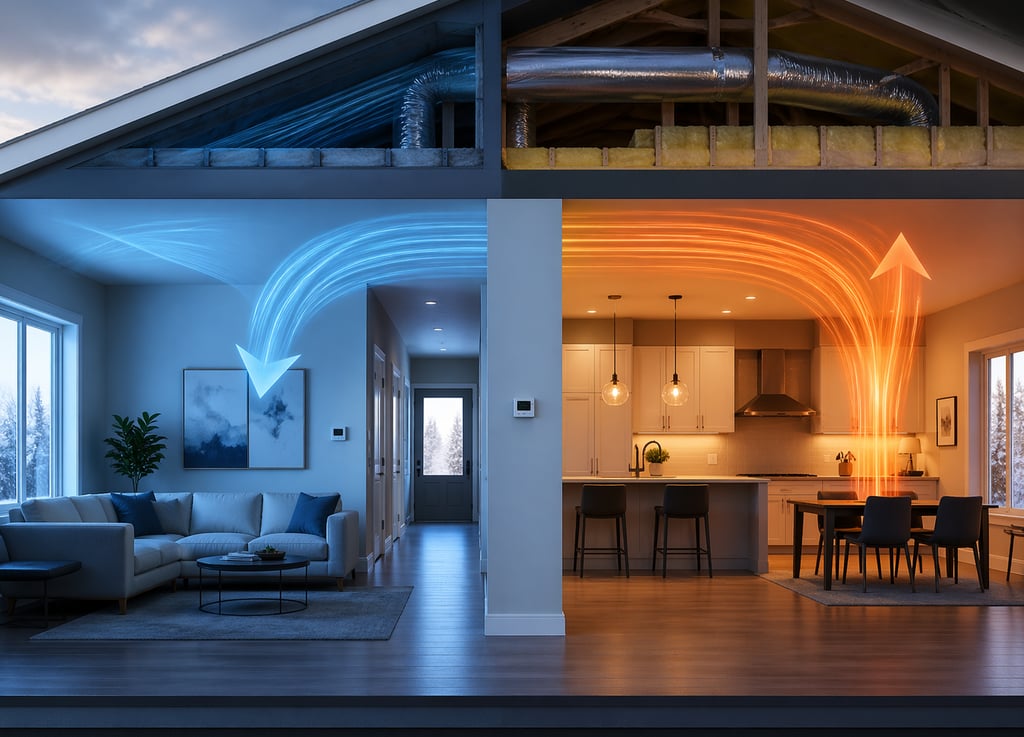
You set the thermostat to 72°, but your bedroom feels cold, your living room feels fine, and one back room feels like it never cools down at all.
So you adjust the thermostat… and now a different room feels off.
That’s not normal—and it’s not something you just have to live with. Uneven temperatures usually point to airflow problems, not a “bad thermostat” or random house quirks. Ignore it long enough, and it starts costing you in higher energy bills and extra wear on your HVAC system.
The Real Issue Isn’t Temperature—It’s Airflow
Most homeowners focus on temperature because that’s what they can see on the thermostat.
But your HVAC system doesn’t control comfort directly—it controls airflow.
Comfort comes from:
How evenly air is distributed
How much air actually reaches each room
How easily that air moves through your duct system
If airflow is uneven, your home will never feel balanced—no matter what temperature you set.
That’s why adjusting the thermostat feels like it helps… but never actually fixes the problem.
What’s Actually Happening Inside Your System
Your duct system is designed to deliver a certain amount of air to each room.
When everything is clean and balanced:
Air moves freely
Each room gets consistent supply
The system doesn’t have to work overtime
But over time, that changes.
Dust buildup, small blockages, and airflow restrictions start to shift how air moves.
Even a small restriction can:
Reduce airflow to certain rooms
Force the system to compensate
Throw off the balance across the entire house
And because it happens gradually, most homeowners don’t notice until it’s already affecting comfort.
Mistake #1: Blaming Insulation First
Insulation is the usual suspect—but it’s not always the problem.
In many cases, uneven temperatures come from airflow issues, not insulation gaps.
Here’s a simple way to tell:
Room eventually reaches the right temperature → likely airflow issue
Room never gets close → could be insulation
Most homeowners spend money fixing insulation when airflow is the real issue—and nothing improves.
Mistake #2: Ignoring Weak Airflow at the Vent
You can learn a lot just by putting your hand over a vent.
If airflow feels weak in one room compared to others, that’s a sign of imbalance.
Common causes of weak airflow:
Dust buildup inside ducts
Partial blockages
Poor duct layout
Air leaks in the system
This is one of the easiest problems to spot—and one of the most overlooked.
Mistake #3: Not Realizing Duct Buildup Changes Air Distribution
Dust and debris don’t just sit inside your ducts—they affect how air moves.
Over time, buildup narrows the path air has to travel.
What that does:
Reduces airflow to certain rooms
Increases pressure in other parts of the system
Forces your HVAC to run longer
Looking at how full-system cleanings are handled—like this Brentwood air duct cleaning breakdown from Mr B Air Duct helps show how airflow problems are often tied to buildup homeowners never see.
Mistake #4: Closing Vents to “Redirect” Air
This is one of the most common DIY fixes—and it backfires.
Your system is designed to move a specific amount of air. Closing vents increases pressure in the system.
What actually happens:
Air gets forced unevenly into other rooms
The system works harder
Efficiency drops
Most homeowners try this thinking it will balance the house. It usually makes things worse.
Mistake #5: Ignoring Return Airflow
Supply vents push air out. Return vents pull it back in.
If return airflow is restricted, your system can’t circulate air properly.
That leads to:
Stuffy rooms
Uneven temperatures
Reduced efficiency
If air can’t move back through the system, it can’t move forward properly either.
Mistake #6: Assuming the HVAC System Is the Problem
When comfort issues show up, many homeowners assume they need a bigger or newer system.
That’s rarely the case.
More often:
The system is fine
The airflow isn’t
Replacing a unit without fixing airflow issues is one of the most expensive mistakes homeowners make.
Mistake #7: Overlooking Duct Layout Limitations
Not all duct systems are designed perfectly.
Some rooms are harder to reach because:
They’re farther from the unit
The duct path is longer or more complex
There are more turns or restrictions
What contractors don’t always mention:
some homes need airflow adjustments—not just cleaning or repairs.
Mistake #8: Not Connecting Rising Energy Bills to Airflow
If your system isn’t distributing air efficiently, it runs longer.
That increases your energy usage.
Here’s what that looks like:
Gradually rising bills
Longer HVAC cycles
More frequent system use
Most homeowners blame utility rates. The real issue is often system efficiency.
Mistake #9: Ignoring Seasonal Changes
Airflow problems don’t always show up the same way year-round.
In hot, humid months:
Your system runs longer
Air feels heavier
Weak airflow becomes more noticeable
In colder months:
Rooms farther from the system struggle more
That’s why some rooms feel fine one season and off the next.
Mistake #10: Not Checking for Partial Blockages
Duct systems don’t always fail completely—they get restricted.
Common hidden issues:
Dust buildup
Debris from renovations
Bent or crushed duct sections
Even a small blockage can reduce airflow enough to affect comfort.
Mistake #11: Skipping Post-Renovation Maintenance
Renovation dust is one of the biggest contributors to airflow problems.
Drywall dust, in particular, spreads easily and settles inside ducts.
What happens next:
Airflow becomes restricted
Dust circulates through your home
The system works harder
Most homeowners don’t connect renovation work to airflow problems later.
Mistake #12: Expecting Quick Fixes to Solve Long-Term Problems
Changing a filter or adjusting vents helps—but only slightly.
If airflow issues have built up over time, they need a deeper fix.
Think of it like this:
Small adjustments = temporary improvement
System issues = require real correction
Mistake #13: Not Considering Room Usage
Different rooms have different heat loads.
A room with:
Direct sunlight
Electronics
More people
…will feel warmer.
That doesn’t always mean something is wrong—but it does affect balance.
Mistake #14: Accepting “Good Enough” Comfort
A lot of homeowners get used to uneven temperatures.
They adjust around it instead of fixing it.
What this actually means:
Your system isn’t balanced
It’s working harder than necessary
You’re paying more over time
Mistake #15: Waiting Too Long to Address It
Airflow issues don’t stay the same—they get worse.
Over time:
Buildup increases
Restrictions get tighter
System strain grows
The longer you wait, the more expensive it gets to fix.
What Actually Fixes Uneven Temperatures
Once you understand the cause, the solution becomes clearer.
Start with these steps:
Check airflow strength at each vent
Make sure return vents aren’t blocked
Replace filters regularly
Have the system inspected if airflow feels uneven
If those don’t solve it, the issue is likely deeper in the duct system.
Quick Checklist Before You Call Anyone
Do some rooms feel weaker than others?
Are you adjusting the thermostat often?
Have your energy bills increased slowly?
Has your home had recent renovation work?
If you said yes to even one or two, airflow is likely part of the problem.
Final Takeaway
Uneven temperatures aren’t random—and they’re not something you just have to deal with.
They’re a sign your system isn’t moving air the way it should.
Skip the mistake of focusing only on the thermostat. Pay attention to airflow, duct condition, and how your system is actually working.
The sooner you fix airflow issues, the less it will cost you down the road.


©2026