
Why Roofing Projects Feel Disruptive Even When Everything Is Going Right (And What Most Homeowners Aren’t Prepared For)
Roofing projects can feel more disruptive than expected—even when everything is going right. Learn what homeowners experience during a roof replacement, what’s normal, and how to prepare for a smoother, less stressful project.
4/20/20265 min read
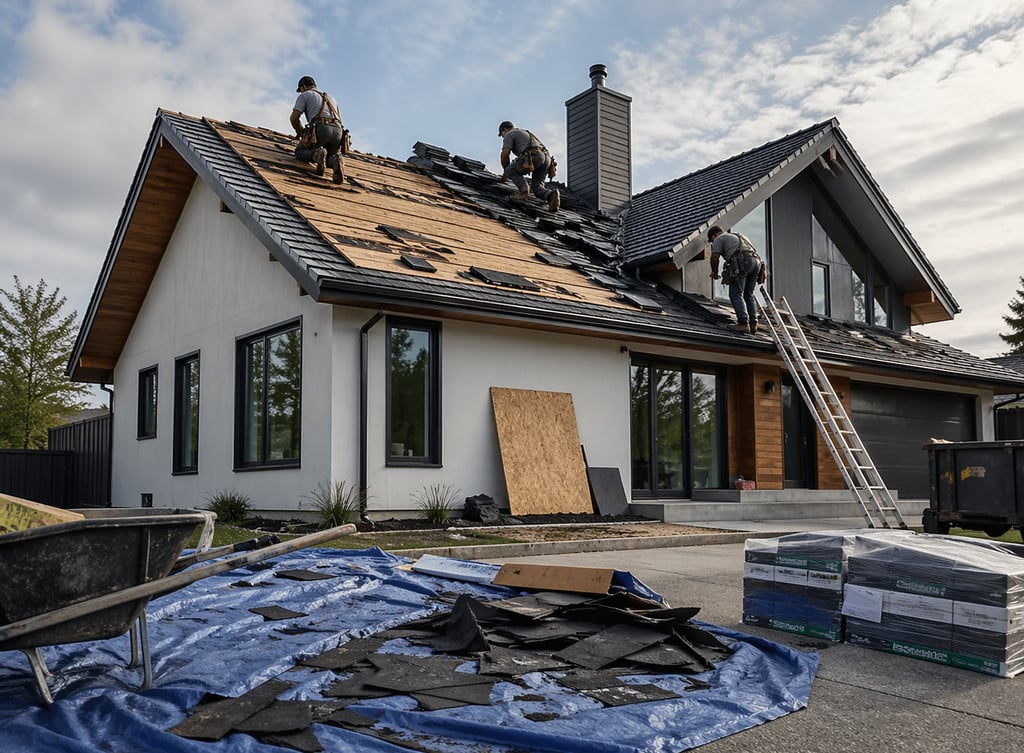
Most homeowners expect roofing to be loud.
What they don’t expect is how much it affects everything else.
Even when the project is going exactly how it should—on schedule, no major issues, experienced crew—you’ll still feel like your house isn’t working the way it normally does.
That’s the part no one really explains.
Not because it’s a problem. But because it’s something you only understand once you’re in the middle of it.
If you know what to expect, it’s manageable.
If you don’t, it can feel like something’s wrong—even when everything is actually going right.
1. The Noise Isn’t Just Loud—It’s Unpredictable and Constant
You already expect hammering.
What catches most homeowners off guard is how uneven the noise is throughout the day.
You’ll hear:
Rapid bursts of nailing
Long scraping sounds as old shingles are removed
Materials sliding across the roof
Sudden heavy drops that feel louder than expected
It’s not steady.
It comes in waves.
In quieter neighborhoods—common around Huntsville—this stands out even more because there’s very little background noise to balance it out.
What this actually affects:
Work-from-home schedules
Phone calls and meetings
Kids’ routines and sleep
Your ability to stay focused
Most homeowners don’t expect how mentally draining this becomes after several hours—not just how loud it is.
What actually helps:
Plan quiet tasks early in the morning or later in the day
Avoid scheduling important calls mid-day
Expect peak noise, not consistent noise
2. You’ll Feel the Work Inside the House (And It Feels Bigger Than It Is)
This is one of the most surprising parts of the process.
Even though the work is happening on the roof, you’ll feel it inside.
You may notice:
Light vibrations in the ceiling
Small rattling sounds from vents or fixtures
Occasional shifting noise from attic areas
It can feel like something is loose.
In most cases, it isn’t.
What’s actually happening:
Impact from tools transfers through framing
Materials are being removed and replaced above you
The structure is absorbing normal construction activity
Your home is designed to handle this.
But it doesn’t feel normal if you’ve never experienced it before.
What matters: the movement should stop when the work stops. If it continues after hours, that’s when you check it.
3. Your Daily Routine Gets Thrown Off More Than Expected
This is where the real stress comes in.
Not from the work—but from how it affects your day.
During a roofing project:
You don’t control when the day starts
You don’t control how intense it gets
You adjust your routine around what’s happening
Even small things feel different:
Taking calls
Working from home
Relaxing in your own space
That loss of predictability is what makes it feel stressful.
Even if:
The crew is doing everything right
The project is on schedule
Nothing is going wrong
Most homeowners don’t expect how much this part affects them.
4. Your Yard and Driveway Temporarily Stop Functioning Normally
Your property becomes a work zone for a few days.
Even with a clean crew, you’ll see:
Roofing materials staged near the house
Equipment placed along walkways
Dump trailers or disposal areas
In areas with red clay soil, like parts of Huntsville:
Dirt spreads faster
Foot traffic leaves visible marks
Rain or humidity makes things messier
What this impacts:
Parking and vehicle access
Entry points to your home
Outdoor routines
Most homeowners don’t plan for this—and it’s one of the easiest things to prepare for.
5. You’ll Always Be Aware Something Is Happening Above You
Even when you’re inside, you won’t forget what’s going on.
You’ll notice:
Movement across the roof
Changes in activity levels
Every shift in sound
It creates a constant awareness.
Not because it’s unsafe—but because it’s unfamiliar.
Your home usually feels controlled.
During roofing work, it doesn’t.
That feeling is normal—it just isn’t talked about much.
6. The Project Feels Longer Than It Actually Is
Most roofing projects are relatively short.
Typical timelines:
One to three days for standard homes
A few extra days for larger or complex roofs
But during the process, it rarely feels quick.
Why?
Because:
Your routine is disrupted
Your environment feels different
You’re more aware of time passing
Perception stretches the experience.
What’s technically two days can feel like four.
Most homeowners say the same thing afterward—it felt longer than it actually was.
7. The Work Looks Messier Than It Actually Is
During the project, things won’t look organized.
You’ll see:
Materials being removed and piled up
Debris building before cleanup
Tools and equipment moving constantly
It can feel chaotic.
But roofing work happens in phases.
Cleanup is usually done at the end—not continuously.
That means:
It looks messy during the process
It should look clean when finished
Don’t judge the project halfway through—that’s when it looks the worst.
8. What a Well-Managed Roofing Project Actually Looks Like
A good roofing project doesn’t feel quiet.
But it does feel structured.
You’ll notice:
Crews arriving consistently
Work moving in clear steps
Communication staying steady
Cleanup happening in stages
Behind the scenes, this comes down to:
Scheduling coordination
Material timing
Crew management
If you want a better idea of how that process works, it helps to understand how a roofing project is typically handled from start to finish not just what’s visible during the work days.
The difference isn’t whether it’s disruptive—it’s whether it feels controlled.
9. What Actually Helps You Handle It Better
This is where preparation makes a difference.
Simple steps that help:
Move vehicles before work begins
Plan important calls outside peak work hours
Let neighbors know ahead of time
Keep pets in quieter areas
Expect limited use of outdoor spaces
These don’t change the work—but they reduce stress significantly.
Most homeowners who plan ahead say the experience feels much easier.
10. When Disruption Is Normal vs. When It’s a Red Flag
Not all disruption is the same.
Normal:
Loud, irregular noise during work
Temporary mess during active phases
Short pauses between steps
Red flags:
Work stopping without explanation
Crews not returning as expected
Debris left unmanaged for long periods
No communication about delays
The difference is structure.
Normal disruption feels active.
Problem disruption feels unorganized.
11. Why This Part Doesn’t Get Talked About
Most roofing advice focuses on:
Cost
Materials
Repairs
Very little talks about:
What the experience actually feels like
Because technically, this isn’t a problem.
But it’s one of the most relatable parts of the process.
And one of the least expected.
12. What to Pay Attention to Before the Project Starts
A little preparation goes a long way.
Before work begins:
Move vehicles out of the work area
Adjust your schedule if you work from home
Plan for limited access to outdoor areas
Let neighbors know what’s coming
Set expectations for noise and activity
These small steps make the project feel much more manageable.
Final Takeaway
Roofing projects don’t just affect your roof.
They affect how your home feels while the work is happening.
Even when everything is going right, you’ll notice:
Noise that’s harder to ignore than expected
Disruption to your routine
A temporary loss of control over your space
That doesn’t mean something is wrong.
It means the work is active.
The difference between a stressful project and a manageable one usually comes down to expectation.
If you understand what normal disruption looks like, it’s easier to adjust, stay calm, and let the project move forward without second-guessing every step.
The sooner you expect it, the less it will throw you off—and the smoother the entire process will feel from start to finish.


©2026