
Why Most Outdoor Spaces Don’t Get Used (And What Actually Fixes It)
Most outdoor spaces go unused because they’re not functional. Learn what actually makes a yard usable, the hidden costs homeowners miss, and how to fix it before wasting money.
3/16/20263 min read
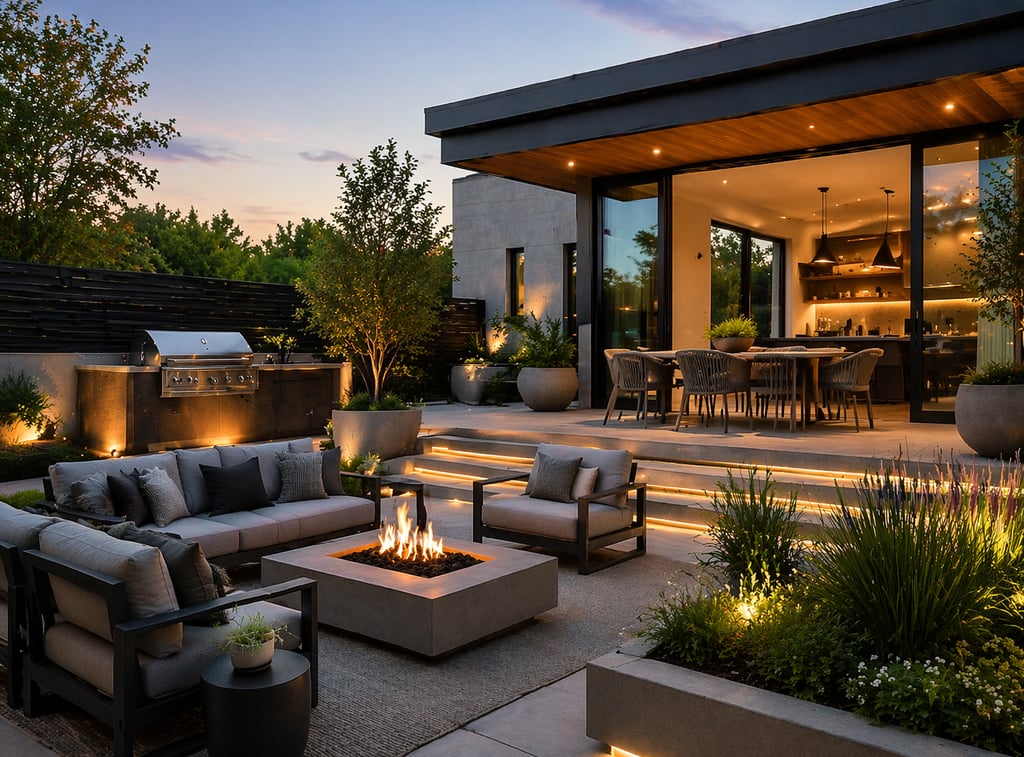
Most outdoor spaces don’t fail because they look bad.
They fail because they don’t work.
You’ve probably seen it—or you’re dealing with it right now. There’s a yard, maybe even a few chairs or a table, but nobody actually uses it. It looks fine from a distance, but when it comes to spending time out there, it never quite happens.
That’s not a design issue.
It’s a usability issue.
If a space feels inconvenient, people won’t use it—no matter how nice it looks.
First: Figure Out What’s Actually Stopping You
Before you spend anything, identify what’s causing you (or everyone else) to avoid the space.
Most homeowners skip this step. They start adding things instead of fixing what’s getting in the way.
Common problems:
Ground feels uneven or unstable
No clear walking path
Water collects after rain
Furniture sinks or shifts
Too much effort to set things up every time
If you don’t fix the friction, nothing else sticks.
The Pattern Most Homeowners Fall Into (And Regret Later)
Here’s what usually happens:
Buy outdoor furniture
Add decor or lighting
Try to “make it work”
For a few days, it feels like progress.
Then reality shows up.
The ground is still uneven. After rain, everything gets messy. People avoid certain spots. The setup feels like work instead of something you enjoy.
And eventually, the space goes back to being unused.
Most homeowners regret spending on appearance before fixing the foundation.
What Actually Makes an Outdoor Space Usable
Strip everything down, and it comes down to three things:
1. Stable ground
2. Defined layout
3. Easy movement
If one of these is missing, the space won’t feel right.
You don’t need a large yard. You don’t need a full redesign.
You need one area that feels solid, easy to move through, and clearly usable.
That’s what changes behavior.
Where Most Fixes Start (And Why People Hesitate)
This is the point where most homeowners pause.
They realize:
“This probably needs something more permanent.”
That’s where structured surfaces come in—things like pavers, stone paths, or defined outdoor sections.
Not because they look better.
Because they solve actual problems:
No mud after rain
No guessing where to walk
No constant rearranging
In real-world setups, you’ll often see this shift happen in spaces built around elements like projects like this, where the focus is on creating stable, usable ground instead of temporary fixes.
This isn’t a recommendation—it’s just how functional spaces tend to be built.
The Hidden Costs Most Homeowners Miss
Outdoor work almost always costs more than expected.
Not because of bad contractors—but because of what gets overlooked.
Typical hidden costs:
Ground prep and leveling
Drainage corrections
Base materials under pavers
Labor for proper installation
Rough ranges (varies by area):
Basic leveling: $1,000–$3,000
Small patio: $3,000–$8,000
Larger structured areas: $8,000+
What most homeowners don’t realize until later:
The visible part is the smallest piece. The base work is what determines whether it lasts.
DIY vs Hiring Out (Where Most People Get Burned)
This is where a lot of money gets wasted.
Usually safe to DIY:
Basic cleanup
Temporary setups
Minor leveling
Worth hiring out:
Drainage fixes
Permanent surfaces
Structural layout
Most homeowners regret DIY attempts on anything below the surface.
If the base isn’t right, everything on top of it will fail faster.
How This Typically Plays Out Over Time
Most outdoor spaces follow the same pattern:
Year 1: Add furniture, minimal use
Year 2: Notice issues (mud, uneven areas)
Year 3: Consider fixing it
Year 4: Finally invest in structure → space gets used
The delay is what costs the most.
Because by the time you fix it:
You’ve already spent money twice
Materials may need replacing
Frustration builds
Local Reality (Especially in Places Like Huntsville)
Outdoor work isn’t the same everywhere.
In mid-sized cities like Huntsville:
Clay soil holds water
Rain creates pooling
Humid summers wear materials faster
Occasional freezes cause shifting and cracking
What works in dry climates often fails faster here.
That’s why prep work matters more than design.
Small Fixes That Actually Change Behavior
You don’t need to redo everything.
Start with one area.
These changes go further than people expect:
Create one solid sitting area
Add a simple path
Fix one drainage problem
Level one section
One usable zone beats a fully designed yard that no one uses.
Quick Checklist Before You Spend Anything
Before calling anyone, go through this:
✔ Where does water go after rain?
✔ What part of the yard do you avoid—and why?
✔ Is the ground stable enough for daily use?
✔ What is the simplest fix that removes friction?
✔ Can you improve one section instead of everything?
Do this before you call anyone.
What Actually Changes Once You Fix It
Once the structure is right:
People use the space without planning
Setup disappears
Movement feels natural
The yard becomes part of daily life
That’s the real goal.
Not appearance.
Use.
Final Takeaway
Most outdoor spaces don’t need more upgrades.
They need fewer obstacles.
Fix what makes the space inconvenient, and everything else becomes easier.
Start with the ground. Fix the part people avoid.
The sooner you handle that, the less you’ll spend trying to work around it later.


©2026