
What Homeowners Often Overlook Before Starting a Gravel, Driveway, or Yard Project (And Why It Gets Expensive Later)
What homeowners often overlook before starting a gravel, driveway, or yard project. Learn hidden costs, common mistakes, drainage issues, and how to avoid expensive repairs.
3/27/20265 min read
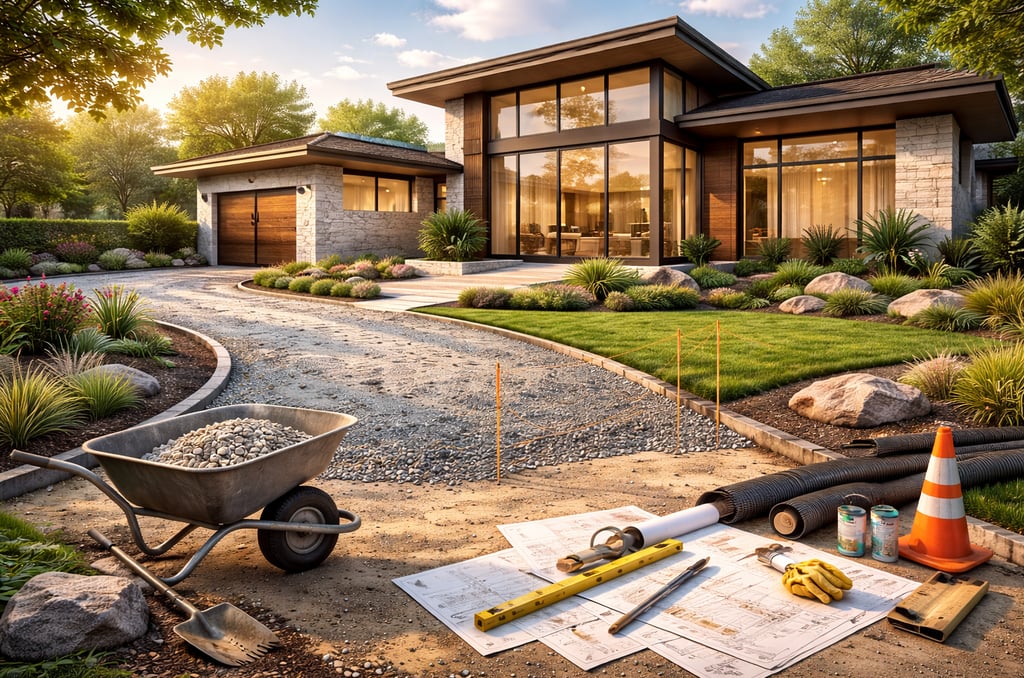
Most homeowners don’t go over budget because they planned badly. They go over budget because they skipped a few things that didn’t seem important at the time.
Gravel driveways, yard grading, and simple dirt work projects feel straightforward. You measure the area, order materials, spread everything out, and expect it to hold.
But what actually determines whether that project lasts five years—or starts failing after one rainy season—is everything you don’t see.
The base. The drainage. The soil behavior. The timing.
Those are the parts most homeowners either underestimate or don’t think about at all.
And that’s where the hidden costs start.
The Ground Underneath Is Usually the Real Problem
Most people think the visible surface is what matters.
It’s not.
The surface is just the finish. The real structure is underneath it.
If the ground below isn’t stable, everything on top will eventually move—no matter how good the material looks on day one.
In Huntsville and similar areas, this is even more important because of clay-heavy soil. Clay expands when it’s wet and contracts when it dries. That constant movement creates stress under anything you build on top of it.
What actually happens when the base isn’t addressed:
Gravel sinks unevenly
Tire ruts form faster than expected
Water starts pooling in low spots
Edges begin to break down
At first, it looks minor. Then it gets worse with every rain.
Red flags most homeowners ignore:
Ground that stays soft after rain
Previous areas where grass struggles to grow
Slight dips or uneven areas you assume “won’t matter”
Important takeaway:
If the soil isn’t stable, the project isn’t stable—no matter how much you spend on materials.
Not All Dirt or Gravel Does the Same Job
This is one of the most common mistakes—and one of the hardest to fix later.
A lot of homeowners assume:
“I just need dirt” or “I just need gravel.”
But materials are not interchangeable.
Each type serves a specific purpose, and using the wrong one can quietly ruin the entire project.
Here’s how they actually differ:
Fill dirt
Used to raise elevation or fill holes. It’s compactable, but not designed for load-bearing surfaces on its own.Topsoil
Great for planting. Terrible for structure. It shifts, holds moisture, and breaks down over time.Crushed stone (with fines)
One of the best options for driveways. It compacts tightly and holds its shape.Pea gravel or loose gravel
Looks clean but shifts easily. Not ideal for high-traffic areas unless properly contained.Mixed base materials
Designed specifically for compaction and long-term stability.
What contractors won’t always explain clearly:
The cheapest material is rarely the right one
Depth matters just as much as material type
Some gravel looks similar but performs very differently
Most homeowners regret choosing based on price alone.
Because what seems cheaper upfront often turns into:
Re-leveling
Adding more material later
Full replacement
Ordering the Wrong Amount (or Timing It Wrong)
This is where projects quietly lose money without anyone noticing right away.
Ordering materials sounds simple, but it rarely goes perfectly the first time.
Two common mistakes:
1. Under-ordering
You don’t get enough material, so you order again.
That means:
Paying for multiple delivery fees
Getting slightly different material batches
Interrupting the workflow
2. Bad timing
Materials arrive before the site is ready—or after work has already started.
If materials sit too long:
Rain compacts them unevenly
Dirt piles spread out or wash away
You lose control over placement
If materials arrive too late:
Crews rush prep work
Steps get skipped
Mistakes get locked in
This is where coordination matters more than people expect.
In fast-growing areas like Huntsville, timing deliveries during dry weather windows can make or break the outcome of the project.
At some point, most homeowners realize they need to understand what materials are actually available locally and how they’re delivered. Even reviewing options like Huntsville rock and dirt delivery can help clarify load sizes, material types, and realistic timelines before placing an order.
That small step often prevents multiple deliveries and mismatched materials.
Drainage Is the Hidden Cost Nobody Plans For
Drainage is where most long-term problems start.
And it’s usually not obvious until after the project is finished.
Water doesn’t need much to cause damage. A small slope in the wrong direction is enough.
What happens when drainage is ignored:
Water sits under the surface
The base softens
Materials begin to shift
Low spots form
Then you start seeing:
Puddles after rain
Washed-out edges
Uneven surfaces
Common drainage mistakes:
Flat grading with no runoff direction
Water flowing toward the house instead of away
Blocking natural drainage paths
Using materials that trap water
In clay-heavy regions, water sticks around longer. That makes drainage even more critical.
Important takeaway:
Fixing drainage after installation usually means tearing everything back up.
That’s where projects double in cost.
Compaction Is Where Most DIY Projects Fail
A project can look perfect and still fail within months.
That usually comes down to compaction.
Compaction isn’t just about pressing material down. It’s about:
Layering correctly
Compacting each layer separately
Using enough weight and pressure
What happens when compaction is skipped:
Materials shift under weight
Surfaces settle unevenly
Tire ruts form quickly
Many DIY projects rely on:
Hand tampers
Driving over the surface
Skipping layers entirely
That’s rarely enough for anything beyond very light use.
Worth hiring out:
If the area will handle vehicles or regular traffic, proper compaction equipment makes a noticeable difference.
Most homeowners don’t realize:
You can use the right material and still fail if compaction isn’t done correctly.
“Looks Good” Doesn’t Mean It’s Done Right
This is one of the biggest traps.
Right after installation:
Everything looks level
Everything looks clean
Everything feels solid
But that’s before:
Rain hits
Soil shifts
Materials settle
Problems show up later:
Slight dips turn into visible low spots
Edges start breaking apart
Water finds weak areas
Most issues don’t show up immediately—they show up after the first few weather cycles.
That’s why experienced contractors focus more on the base than the finish.
A project that looks slightly rough during install can actually perform better long-term than one that looks perfect but skipped key steps.
Small Cost-Cutting Decisions Add Up Fast
Trying to save money upfront is normal.
But certain shortcuts almost always lead to higher costs later.
Common shortcuts that backfire:
Using less material depth than recommended
Skipping a base layer
Choosing cheaper, loose material
Ignoring drainage fixes
Rushing site prep
Each one saves a little money upfront.
Together, they create long-term problems.
What most homeowners regret:
Not going deep enough with material
Not fixing the base when they had the chance
Having to redo the same project
Important takeaway:
Saving a few hundred dollars upfront can cost thousands later.
Projects Almost Always Get Bigger Once You Start
This happens more often than people expect.
You begin with a simple plan:
“I just need to fix the driveway.”
Then you notice:
The slope isn’t right
Water is moving in the wrong direction
Nearby areas need work too
Now the project expands.
This isn’t poor planning—it’s just reality once you see the full condition of the site.
What helps manage this:
Build a buffer into your budget (10–20%)
Expect at least one unexpected issue
Don’t rush decisions halfway through
Most homeowners underestimate scope—not because they’re careless, but because problems aren’t visible until work begins.
Local Conditions Change Everything
A lot of online advice doesn’t account for regional differences.
That’s where things go wrong.
In areas like Huntsville:
Clay soil holds water longer
Humidity slows drying
Sudden rain can undo recent work
Freeze cycles (even if occasional) cause expansion
What works in one region might fail in another.
For example:
A shallow gravel base might work in sandy soil
That same setup fails in clay-heavy soil
Important takeaway:
Local conditions matter more than general advice.
This is why talking to local suppliers or contractors—even briefly—can save time and money.
Do This Before You Call Anyone
Before bringing in a contractor or ordering materials, spend some time understanding your site.
It doesn’t take long, but it changes the outcome.
Quick checklist:
Where does water go after rain?
Is the ground firm or soft?
What direction does the slope move?
What will the area actually be used for?
Write this down.
It helps you:
Ask better questions
Get clearer quotes
Avoid vague recommendations
Do this before you call anyone. It saves time and prevents confusion later.
Final Takeaway
Most outdoor projects don’t fail because of one big mistake.
They fail because of:
Weak base preparation
Wrong material choices
Skipped steps that seemed minor
If you slow down at the beginning, you usually save money at the end.
Take time to understand:
The ground
The materials
The water flow
That’s what determines whether the project lasts—or needs to be redone.
The sooner you handle those details, the less it will cost you down the road.


©2026