
What Homeowners Don’t Realize About Window Glass Problems (Until They Start Costing You Money)
Most homeowners ignore early window glass problems until they lead to higher energy bills, drafts, and costly repairs. Learn the real warning signs, hidden costs, and what to check before replacing your windows.
4/22/20265 min read
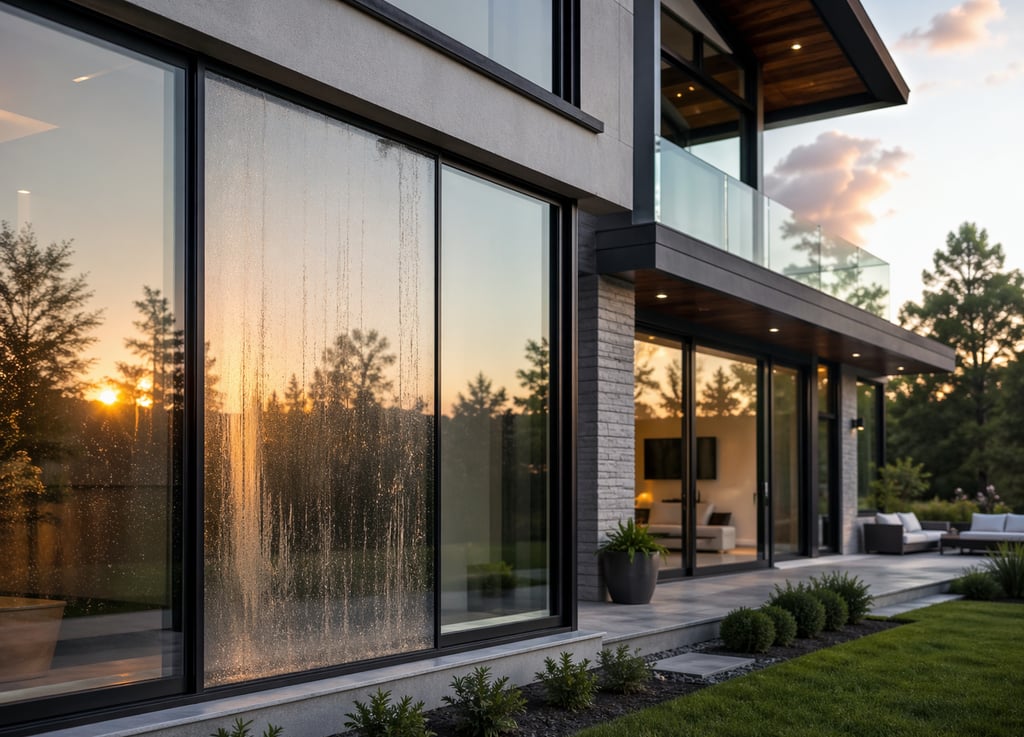
Most window problems don’t start with a crack.
They start with something small you ignore:
A little fog in the morning
A room that feels slightly off
A window that just looks older than the rest
Nothing urgent. Nothing broken.
But here’s what actually happens: by the time you notice a pattern, the problem has already been there for a while—and it’s already costing you money.
Glass issues are slow, quiet, and easy to misread. That’s why most homeowners deal with them later than they should.
1. Glass Doesn’t Fail All at Once (It Breaks Down in Stages)
Windows don’t suddenly “go bad.” They wear out in layers.
Here’s the typical sequence most people never see:
The seal between panes weakens
Tiny amounts of moisture start getting in
Temperature changes cause expansion and contraction
Stress builds in the glass and frame
In a place like Huntsville, where you get humid summers, strong sun exposure, and occasional cold snaps, those cycles happen constantly.
Over time, that stress adds up.
What most homeowners miss:
By the time you notice fog or feel a temperature difference, you’re already in the later stages—not the beginning.
That’s why early fixes feel “too late” even when the problem just became noticeable.
2. Foggy Windows Are a Performance Problem, Not a Cosmetic One
A lot of people treat foggy glass like it’s just something you clean.
It’s not.
Fog inside double-pane windows means the insulating seal has failed. Once that seal is gone:
The insulating gas (usually argon) escapes
Moisture replaces it
The window loses most of its efficiency
At that point, the window is basically functioning like a single-pane unit.
Real-world impact:
More heat enters during summer
More heat escapes during winter
HVAC runs longer and more often
In a home where AC already works hard most of the year, this is one of those hidden costs that slowly builds month after month.
Takeaway:
If you see fog between panes, the damage is already done—cleaning it won’t fix anything.
3. Drafts Are Often Subtle (And Easy to Misread)
When people think of drafts, they expect to feel air moving.
That’s not usually what happens.
Instead, you’ll notice:
One room always feels slightly uncomfortable
Floors near windows feel cooler
Furniture near the window feels colder to the touch
That’s because the air leakage is small but continuous.
What contractors won’t always tell you:
Even minor air leaks can have a noticeable impact over time—especially in homes with high HVAC usage.
In many cases, the issue isn’t obvious until you compare rooms side by side.
If one room never feels quite right, don’t assume it’s your HVAC right away.
4. This Is One of the Most Commonly Misdiagnosed Home Issues
Here’s where homeowners spend money they didn’t need to spend.
They notice:
Uneven temperatures
Rising energy bills
Rooms that feel “off”
So they assume:
HVAC system needs servicing
Insulation is the problem
Ductwork needs repair
Those are all reasonable guesses.
But in many cases, the root issue is window performance—not the systems around it.
What this leads to:
Paying for HVAC inspections that don’t solve the issue
Adding insulation that doesn’t change comfort
Replacing parts that were working fine
Skip this mistake:
Before spending on major systems, check whether your windows are still performing the way they should.
5. Small Cracks Are More Serious Than They Look
A small crack doesn’t just sit there.
With temperature changes, it expands and contracts. Over time:
The crack spreads
Stress concentrates around weak points
The glass becomes more likely to fail suddenly
This is especially true in climates with daily temperature swings.
Here’s what most homeowners don’t realize:
There’s no reliable timeline.
A crack might stay stable for months—or it might spread quickly after a single weather shift.
Waiting doesn’t stabilize the problem. It just makes the outcome unpredictable.
6. You Might Be Replacing More Than You Need To
This is one of the biggest money mistakes homeowners make.
They assume:
“If the window is bad, I have to replace the whole thing.”
That’s not always true.
In many cases:
The frame is still solid
Only the insulated glass unit has failed
A glass-only replacement is possible
Typical cost difference:
Glass replacement: often a few hundred dollars
Full window replacement: can run $800–$1,500+ per window
What to ask before agreeing to anything:
Can the glass be replaced without removing the frame?
What condition is the frame actually in?
What happens if I wait six months?
Most homeowners regret not asking these questions upfront.
7. Waiting Too Long Removes the Cheapest Fixes
Timing matters more than people expect.
Early stage:
Seal failure only
Glass replacement possible
Lower labor cost
Later stage:
Moisture damage spreads
Frames begin to warp
Full replacement becomes necessary
Hidden cost:
Delaying the fix doesn’t keep costs stable—it pushes you into a more expensive category.
This is one of those “deal with it now or pay more later” situations.
8. Not All Glass Problems Have the Same Solution
Not every issue is solved the same way.
Here’s how different problems are usually handled:
Fog between panes → insulated glass replacement
Visible cracks → pane replacement
Frame movement → structural adjustment or repair
Air leakage → resealing or component replacement
This is why it helps to understand what’s actually going on before agreeing to a fix. Seeing how different types of window problems are handled in real situations can give you a clearer sense of what applies to your home by looking at how different window glass repair and replacement situations are typically handled.
Takeaway:
Don’t let someone jump straight to replacement without explaining the specific problem first.
9. Installation Problems Show Up Later (Not Immediately)
Even good materials fail if installed poorly.
Common installation issues include:
Improper sealing
Slight misalignment
Uneven pressure on the glass
These don’t usually cause immediate problems.
Instead, they create conditions where:
Seals fail earlier than expected
Air leaks develop slowly
Cracks form under stress
What homeowners don’t always hear:
A high-quality window installed poorly will fail faster than an average window installed correctly.
The install matters just as much as the product.
10. Older Homes Make It Harder to Spot the Problem
In older homes, window issues blend in.
You expect:
Minor drafts
Temperature inconsistencies
Occasional condensation
So when glass performance drops, it doesn’t stand out.
What actually happens:
Problems go unnoticed for years
Energy loss becomes “normal”
Comfort gradually declines
In many cases, homeowners adjust their behavior instead of fixing the issue:
Running HVAC longer
Avoiding certain rooms
Adding temporary fixes
That’s how small problems quietly turn into long-term costs.
11. Window Problems Affect More Than Just Temperature
When glass stops performing, the effects go beyond heating and cooling.
You may notice:
Increased outside noise
Higher indoor humidity
More dust movement
That’s because windows also control:
Air exchange
Moisture balance
Sound insulation
Takeaway:
If your home feels off in multiple ways—not just temperature—windows are often part of the problem.
12. Quick Fixes Can Create Bigger Problems
Temporary solutions can help—but only if you understand their limits.
Common short-term fixes:
DIY caulking
Window film
Covering cracks
These can:
Reduce drafts temporarily
Improve comfort short-term
But they can also:
Trap moisture inside the unit
Hide worsening damage
Delay proper repair
Rule of thumb:
Use temporary fixes as a bridge—not a solution.
13. If One Window Is Failing, Others May Follow
Windows installed at the same time tend to age the same way.
If one is failing, check for early signs in others:
Slight fogging
Minor drafts
Subtle frame changes
This doesn’t mean you need to replace everything.
But it does mean:
You should look for patterns
Plan ahead instead of reacting one window at a time
Most homeowners only realize this after fixing the same issue multiple times.
14. The “It’s Still Fine” Trap Costs More Than You Think
This is where most people get stuck.
Nothing is broken.
Everything still works.
So it feels okay to wait.
But over time:
Energy bills creep up
Comfort drops
Problems become more noticeable
And eventually, what could have been a smaller repair becomes a larger one.
Most homeowners regret waiting at this stage.
Final Takeaway (Do This Before You Call Anyone)
If you’re noticing window issues, don’t guess—check.
Start with this quick list:
Do you see fog between panes?
Does one room feel consistently off?
Are there small cracks (even hairline)?
Have your energy bills increased without a clear reason?
If the answer is yes to even one, it’s worth looking into.
Then:
Get at least three written quotes
Ask if glass-only replacement is possible
Make sure the cause—not just the symptom—is explained
The sooner you handle window problems, the more options you keep—and the less it usually costs you down the road.


©2026