
What Homeowners Don’t Realize About Site Prep, Drainage, and Engineering Before Building or Renovating
What homeowners don’t realize about site prep, drainage, and engineering before building or renovating. Learn hidden costs, common mistakes, and how to avoid expensive problems later.
3/30/20265 min read
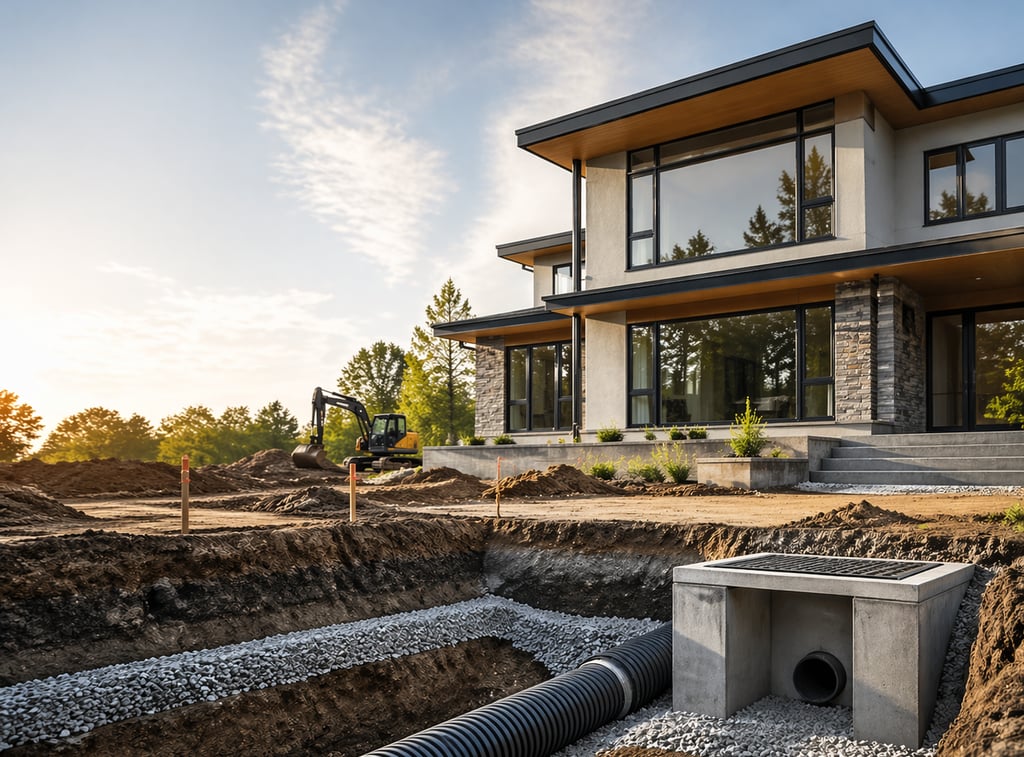
Most homeowners don’t run into expensive problems during construction—they run into them before construction even starts.
That part doesn’t get much attention.
You’ll spend time choosing finishes, comparing materials, and thinking about layout. But the part that quietly determines whether your project holds up long-term is what happens before any of that begins.
Site prep. Drainage. Soil behavior. Basic engineering decisions.
These are the things most people only learn about after something goes wrong.
The Work That Matters Most Happens Before Anything Is Built
Before the first truck shows up or any materials are delivered, your project already has a direction.
That direction is set by:
How the ground is shaped
How water moves across the lot
What type of soil you’re building on
How stable the base actually is
These decisions don’t show up in the final photos. But they show up later in how everything performs.
What actually happens when this step is rushed:
Water collects near the foundation
Driveways start cracking earlier than expected
Patios settle unevenly
Yard areas stay wet long after rain
At first, it looks like normal wear.
Over time, it becomes a pattern.
Important takeaway:
If the ground isn’t prepared correctly, everything built on top of it is working against that mistake.
Drainage Problems Don’t Start During Rain — They Start During Planning
Most homeowners only notice drainage when they see water sitting somewhere it shouldn’t.
But by that point, the problem has already been built in.
Drainage is decided when:
The lot is graded
The slope is set
The base is prepared
In Huntsville and similar areas, this matters more than people expect.
Clay-heavy soil:
Holds water longer
Drains slower
Expands and contracts with moisture
That combination makes small mistakes more noticeable over time.
Common drainage issues that show up later:
Water moving toward the house instead of away
Standing water after light rain
Soil erosion along slopes
Damp or soft areas that never fully dry
What contractors won’t always tell you directly:
Fixing drainage after construction usually means undoing finished work.
That’s where the cost jumps.
“It Looks Level” Isn’t the Same as “It Works Properly”
A clean, level yard looks finished.
But level doesn’t always mean functional.
Water needs direction. Without it, it settles.
And it doesn’t take much:
A slight dip
A barely noticeable slope
A low edge along a walkway
That’s enough to create a problem over time.
Red flags most homeowners miss early:
Water sitting in small patches after rain
Grass struggling in certain areas
Soil that stays soft longer than everything around it
These don’t look like major issues.
But they’re usually early signs of poor grading.
Skip this mistake:
Don’t judge the work based on how it looks right away. Pay attention to how it behaves after rain.
Soil Conditions Change How Everything Performs
This is one of the biggest gaps in understanding.
Most homeowners assume the ground is stable enough to build on.
Sometimes it is. Sometimes it isn’t.
In areas like Huntsville:
Clay soil expands when wet
Shrinks when dry
Holds moisture longer than expected
That movement puts stress on anything built above it.
What this affects long-term:
Foundations
Driveways
Retaining walls
Walkways and patios
If the soil isn’t handled properly during prep, you’ll start to see:
Cracks
Uneven settling
Shifting surfaces
These don’t always show up immediately.
But once they do, they’re harder to fix.
Most homeowners regret not asking about soil conditions upfront.
Site Prep Isn’t Just Moving Dirt Around
A lot of people think site prep means leveling the ground and moving soil into place.
That’s only part of it.
Proper site prep includes:
Removing unsuitable or loose soil
Adding the right type of fill material
Compacting layers correctly
Creating controlled drainage paths
Each step builds on the one before it.
If one step is skipped or rushed, the next one doesn’t perform the way it should.
Common shortcuts that lead to problems:
Skipping compaction
Using the wrong type of fill
Filling low spots without fixing drainage
These save time upfront.
But they almost always show up later as repairs.
This Is Where Engineering Quietly Makes the Difference
Most homeowners don’t think about engineering unless something goes wrong.
But this is actually where a lot of problems are either prevented—or created.
Engineering decisions affect:
How water flows across the property
How stable the ground is under load
How grading supports the structure over time
It’s not about making the project more complicated.
It’s about making sure everything works together before anything is built.
At some point—especially on sloped lots, drainage-prone areas, or new construction—homeowners start looking into how these things are evaluated professionally. Even reviewing how civil engineering planning is handled in Huntsville can give you a better sense of what goes into grading, drainage, and site preparation before construction begins.
That kind of context helps you ask better questions—and avoid vague answers.
Permits and Site Plans Are Not Just Paperwork
Permits often feel like a delay.
Something you have to deal with before you can actually start building.
But they exist for a reason.
They usually include requirements related to:
Drainage
Setbacks
Utility placement
Safety standards
What most homeowners don’t realize:
Skipping proper planning can lead to:
Rework
Delays
Extra costs
Inspection issues
Getting approvals in place early keeps the project moving smoothly later.
Small Decisions Early Turn Into Big Costs Later
This is where most problems start.
Not from one major mistake—but from several small ones.
Examples:
Reducing material depth to save cost
Skipping a drainage solution
Adjusting slope slightly to speed things up
Each decision seems minor.
But they affect how everything performs together.
Hidden cost most homeowners miss:
Fixing these issues later often requires tearing things out and starting over.
That’s where budgets get stretched.
When It’s Worth Slowing Down (Even If You Want to Start Fast)
It’s normal to want to move quickly once a project is planned.
But there are a few points where slowing down actually saves money.
Do this before you call anyone:
Walk your property after rainfall
Look at where water collects
Check for soft or uneven ground
Notice how water moves across the lot
This gives you a clearer understanding of what needs to be addressed.
It also helps you avoid relying on assumptions.
What to Ask Before Work Begins
Most homeowners ask about timeline and cost.
That’s important—but it’s not enough.
Ask questions about what’s happening underneath.
Questions that actually matter:
How will water move away from the structure?
What type of soil are we dealing with?
How will the base be prepared and compacted?
What happens if this step is skipped?
Clear answers show that the work is being thought through properly.
Vague answers are usually a sign to slow down and ask more questions.
Final Takeaway
Most expensive problems don’t come from bad materials or poor finishes.
They come from what happens before those materials are installed.
If you get site prep, drainage, and ground conditions right, everything else becomes easier to manage.
If you don’t, the fixes usually cost more than doing it correctly the first time.
Quick checklist:
Understand how water moves on your property
Ask about soil conditions
Don’t rush site preparation
Make sure drainage is planned—not assumed
The sooner you handle these details, the less it will cost you down the road.


©2026