What Homeowners Don’t Realize About Roof Problems That Start Inside the House
Most homeowners wait for visible roof damage—but problems often start inside the house first. Learn the early warning signs, hidden costs, and what to check before small roofing issues turn into expensive repairs.
4/15/20266 min read
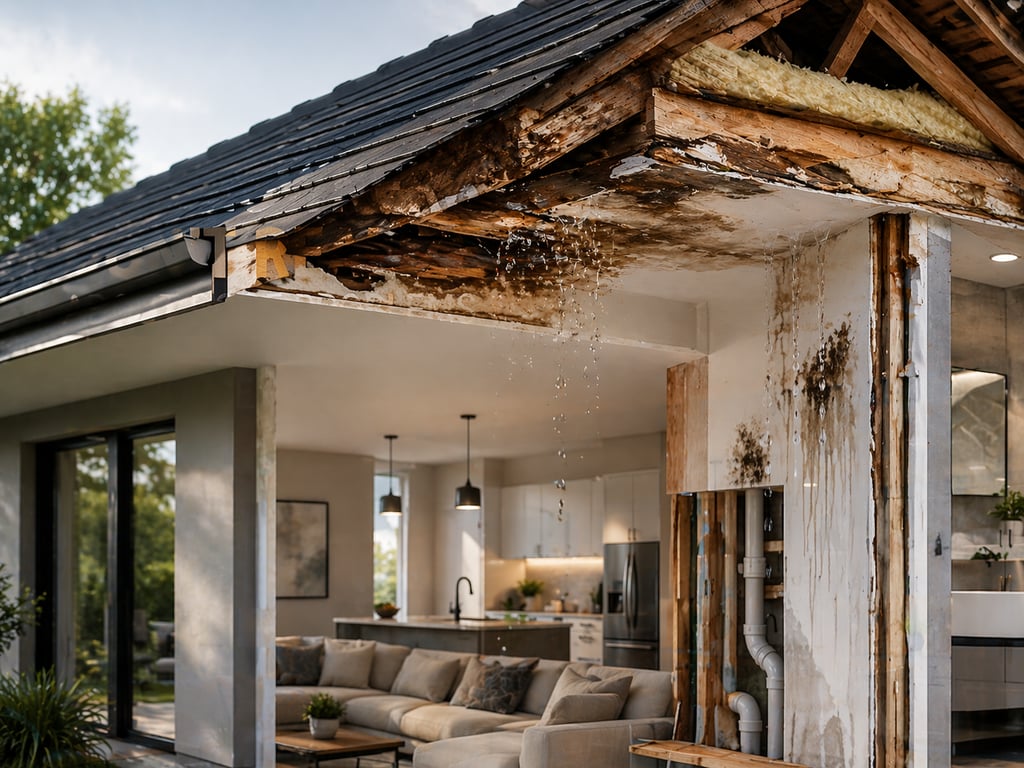
Most homeowners wait for a roof problem they can see. That’s usually when it’s already expensive.
What actually happens in a lot of homes is quieter than that.
No missing shingles. No storm damage. No obvious leak.
Instead, the first signs show up inside—temperature issues, small smells, tiny visual changes that don’t seem urgent.
That’s where people lose money.
Because by the time it turns into a “roof problem,” the damage has already spread through insulation, drywall, and sometimes framing.
This isn’t about scaring you. It’s about helping you catch things earlier—when they’re still manageable.
1. Rooms That Never Feel the Same Temperature
You’ve probably got one room that’s always off.
Too warm in the summer. Too cold in the winter.
Most people assume it’s the AC or ductwork.
Sometimes it is. But a lot of times, the problem starts in the attic.
Here’s what’s usually going on:
Ventilation isn’t moving air properly, so heat gets trapped
Insulation has shifted or gotten damp, reducing its effectiveness
Air leaks from the roof system are letting conditioned air escape
In a humid, high-heat area like Huntsville, this gets worse fast. Attics can reach 120–140°F in summer. If airflow isn’t working, that heat pushes downward into living spaces.
What this actually costs you:
$20–$100/month higher energy bills
AC units running longer and wearing out faster
Uneven comfort that never really gets fixed
Most homeowners regret treating this like a comfort issue instead of a system issue.
Do this before you call anyone:
Check your attic during the hottest part of the day
If it feels like a sealed oven with no airflow, that’s your starting point
2. That Slight Musty Smell You Can’t Explain
This is one of the easiest signs to ignore.
It’s not strong. It doesn’t linger all day.
But it shows up:
After rain
Early in the morning
In certain rooms more than others
That smell is often early moisture buildup.
And a lot of times, it’s coming from above.
Common causes tied to roofing systems:
Small, slow leaks that haven’t reached drywall yet
Condensation forming due to poor attic ventilation
Humidity trapped inside insulation layers
Here’s the part most people miss:
Moisture doesn’t stay where it starts.
It spreads into:
Wood framing
Insulation
Ceiling backing
Hidden costs that build quietly:
Mold growth inside insulation ($2,000–$6,000+ to fix)
Wood softening that leads to structural repairs
Reduced indoor air quality
What contractors won’t tell you unless you ask: by the time the smell is strong, the problem has usually been there for months.
Quick check:
Go into the attic after a humid day
If it smells stronger up there, that’s not normal
3. Faint Ceiling Discoloration (Before It Looks Like a Leak)
Most people wait for a visible stain.
That’s already late.
Early-stage moisture looks like:
Slight yellowing in corners
Faint shadow lines along seams
Areas where paint looks just a little dull
Easy to overlook. Easy to blame on lighting or age.
But these are often the first visible signs of moisture movement.
Here’s what actually happens behind that ceiling:
Moisture collects in insulation
It slowly transfers into drywall
Paint starts to react to the change
At this stage, the fix might still be simple.
If you wait:
Drywall needs replacement
Insulation has to be removed
The source becomes harder to isolate
Skip this mistake: repainting over it doesn’t solve anything. It just hides it temporarily.
4. Energy Bills That Keep Creeping Up
If your electric bill keeps rising and your usage hasn’t changed, something is off.
Most homeowners look at:
Appliances
Thermostat settings
Seasonal changes
They rarely look at the roof.
But your roof and attic control how your home handles heat.
When something’s not working:
Heat enters more easily
Cool air escapes faster
Humidity becomes harder to manage
In high-heat regions, this matters a lot.
Real numbers homeowners see:
Gradual $30–$80/month increases
AC systems running longer cycles
Higher humidity inside the home
This is one of the most common hidden costs homeowners deal with—and they don’t connect it to the roof.
What to check:
Compare bills year over year, not just month to month
Look for steady increases without a clear reason
5. Drafts Where There Shouldn’t Be Any
A draft near a window is normal.
A draft in the middle of a room isn’t.
That usually means air is moving through places it shouldn’t.
Roof-related causes include:
Gaps in attic sealing
Poorly sealed vents or pipe penetrations
Aging roof decking allowing airflow
These aren’t dramatic failures. They’re small openings that add up.
What this leads to:
Temperature inconsistency
Dust getting pulled into the home
Reduced insulation performance
Over time, your house becomes harder to control.
Worth hiring out: this isn’t something you want to guess on. Airflow issues are easy to misdiagnose.
6. Nails or Fasteners Showing Up Inside
If you ever notice nails in your attic—or pushing toward ceilings—that’s not random.
It’s usually caused by:
Moisture expanding and contracting wood
Heat stress in the attic
Installation issues starting to show over time
This is a sign the system is under stress.
Why this matters:
Fasteners are losing grip
Structural movement is happening
The problem is already affecting multiple components
Most homeowners regret ignoring this because it feels minor—but it rarely is.
7. An Attic That Feels Like a Different Climate
Your attic shouldn’t feel comfortable—but it shouldn’t feel extreme either.
If it feels:
Extremely hot
Heavy or humid
Completely still with no airflow
That’s a ventilation problem.
And ventilation is one of the most overlooked parts of roofing.
In areas with humid summers and clay-heavy soil, moisture doesn’t dry out easily. That makes ventilation even more important.
What poor ventilation causes:
Faster breakdown of insulation
Moisture buildup in wood
Shorter lifespan of roofing materials
Typical fixes cost:
$300–$1,200 for ventilation improvements
Much more if damage has already spread
This is one of the few issues that actually saves money when you fix it early.
8. Why Most Homeowners Miss These Signs
Because none of them clearly point to the roof.
They feel like:
HVAC problems
Minor home quirks
Cosmetic issues
But they’re often connected.
Here’s how it usually unfolds:
Small issue starts in attic
Airflow or moisture changes
Interior symptoms show up
Visible roof damage comes last
By the time you’re looking at shingles, you’re already dealing with a bigger problem.
This is why catching interior signs early actually saves money.
9. What a Real Inspection Should Include
A quick look at shingles isn’t enough.
A proper inspection should cover:
Attic airflow and ventilation
Insulation condition
Moisture presence
Roof decking health
Sealing around vents and penetrations
If someone skips the attic, they’re missing half the picture.
If you’re already seeing signs inside, it helps to understand how a full system check is typically handled—like what’s included in a standard roof inspection and repair process and how different components are evaluated together.
Red flags when getting quotes:
No mention of ventilation
No attic inspection
Vague pricing without breakdown
Get at least three written quotes. If one is much cheaper but skips details, that’s usually why.
10. What These Small Signs Turn Into If You Wait
This is where things get expensive.
Small issues can turn into:
Full insulation replacement ($1,500–$4,000+)
Drywall repairs across multiple rooms
Mold remediation ($2,000–$6,000+)
Roof decking repairs
Early roof replacement
And the frustrating part?
Most of this damage is preventable.
The delay—not the problem—is what increases cost.
11. Contractor Traps Most Homeowners Fall Into
Once you call someone, a different set of problems shows up.
Common traps:
Pushing full replacement when repair would work
Ignoring root causes like ventilation
Giving vague estimates with no detail
What to ask before agreeing to anything:
What caused the issue?
Is ventilation part of the problem?
What happens if I don’t fix this now?
What to look for in a good quote:
Clear scope of work
Material breakdown
Timeline and warranty details
A good contractor explains the system. A bad one sells the surface.
12. What to Pay Attention to Going Forward
You don’t need to inspect your roof constantly.
But you should notice changes inside your home.
Watch for:
New or recurring smells
Temperature inconsistencies
Subtle ceiling changes
Rising energy bills
These are early signals.
And in many cases, they show up long before visible damage does.
Catch them early, and you’re dealing with a repair—not a project.
Final Takeaway
Roof problems don’t usually start outside where you can see them.
They build slowly—inside your attic, your insulation, and your airflow.
Quick checklist:
One room always uncomfortable?
Slight musty smell after rain?
Faint ceiling discoloration?
Energy bills creeping up?
If you checked even one of these, it’s worth a closer look.
The sooner you handle it, the more likely it stays a small fix instead of a major expense.
The sooner you deal with it, the less it will cost you down the road.

©2026