
The Small Signs Your House Might Be Moving (And Why People Ignore Them)
Small cracks, sticking doors, sloped floors, and drainage problems may be early signs your house is moving. Learn what homeowners often ignore, what actually matters, and how to avoid expensive foundation repair mistakes.
4/27/20266 min read
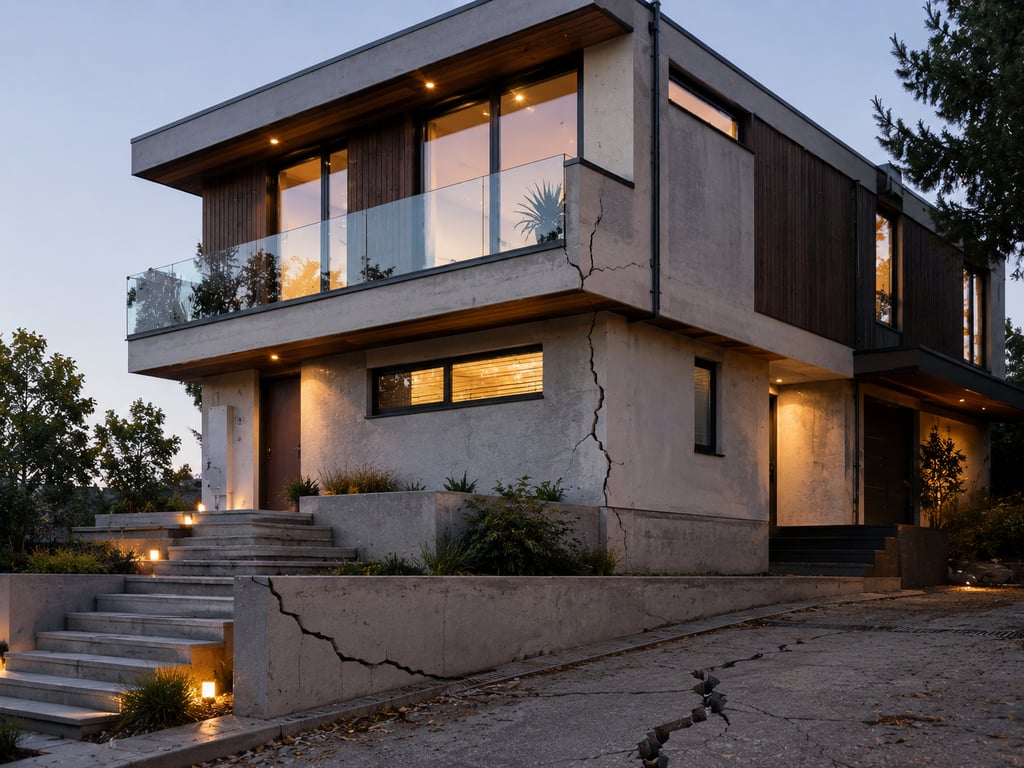

Most homeowners expect foundation problems to announce themselves dramatically.
A giant crack in the wall.
A floor that feels obviously sloped.
A door that suddenly refuses to close.
A “well, that can’t be good” moment.
Sometimes that happens.
Most of the time?
It doesn’t.
Foundation issues usually start with boring little clues people explain away.
A crack above a doorway.
A sticking window.
A gap in the trim.
A floor that feels just slightly off.
Something subtle enough to ignore.
And that’s exactly why these problems get expensive.
Not because every crack means your house is in trouble.
Because most homeowners wait until the signs become impossible to dismiss.
By then, you’re often dealing with a larger repair, more systems affected, and a bigger invoice.
If you live in Huntsville or similar areas, this matters even more.
North Alabama’s clay-heavy soil doesn’t stay put politely. It expands when saturated, shrinks when dry, and keeps repeating that cycle year after year. Add humid summers, occasional freezes, fast neighborhood development, drainage issues, and inconsistent lot grading, and homes move more than many owners realize.
That doesn’t mean panic.
It does mean paying attention.
Small Cracks That Keep Quietly Changing
Every house gets cracks.
That part is normal.
Drywall expands and contracts.
Paint ages.
Minor settling happens.
Materials shift slightly over time.
A stable hairline crack that looks exactly the same five years from now probably isn’t the same concern as a crack that keeps changing.
That’s the key difference.
What matters isn’t “Is there a crack?”
It’s “Is this crack evolving?”
Watch for:
cracks getting longer
cracks getting wider
cracks reopening after patching
diagonal cracks around doors or windows
stair-step cracking in brick or block
separation where walls meet ceilings
A tiny crack today doesn’t automatically mean structural trouble.
A crack that keeps returning after cosmetic fixes?
Different conversation.
This is where homeowners lose money.
They patch.
Repaint.
Ignore it.
Patch again.
Repaint again.
Meanwhile, movement continues.
That’s not actually saving money.
That’s delaying diagnosis.
Doors and Windows That Suddenly Start Acting Weird
This is one of the most commonly ignored warning signs because the explanation feels harmless.
Humidity.
Old house quirks.
Seasonal swelling.
Loose hardware.
And to be fair, sometimes that’s exactly what’s happening.
Wood moves.
Older homes settle.
Minor alignment issues happen.
But patterns matter.
If multiple doors or windows suddenly become harder to operate, that deserves attention.
Things to watch:
doors rubbing at the top corner
latches no longer lining up
windows sticking unexpectedly
doors drifting open or closed by themselves
gaps appearing around frames
Frames don’t randomly change geometry without a reason.
Something changed.
The question is whether that “something” is ordinary seasonal movement or a bigger structural shift.
Most homeowners guess.
Better approach: document when it started, note whether weather changes affect it, and see whether the problem spreads.
Floors That Feel Just Slightly Off
This one gets ignored constantly.
Because humans adapt fast.
If a floor gradually changes, your body often adjusts before your brain pays attention.
You stop noticing subtle slope.
Until a guest comments.
Or furniture starts rocking.
Or something rolls across the room.
Signs worth paying attention to:
furniture wobbling unexpectedly
visible floor slope
rolling objects drifting
sections that feel bouncy or uneven
transitions between rooms feeling off
Important reality check:
Not every uneven floor means foundation trouble.
Older homes often have imperfect floors.
Construction tolerances vary.
Settling happens.
But changing floor behavior matters more than existing imperfection.
A floor that has “always been like that” is different from one that’s getting worse.
Simple tools help.
A level.
A marble test.
Even repeat photos over time.
Objective observations beat guessing.
Trim Gaps, Cabinet Separation, and Cosmetic Clues People Misread
Cosmetic symptoms are where many homeowners get fooled.
Because they look minor.
Trim pulls away slightly.
Cabinets separate from walls.
Countertops pull away from backsplashes.
Baseboards develop little gaps.
These seem like finishing issues.
Sometimes they are.
But sometimes they’re the visible symptom of movement elsewhere.
This is where repeated cosmetic repair becomes a money trap.
A homeowner pays a handyman $250 to recaulk and repaint.
Problem looks fixed.
Six months later, the gap returns.
Now it’s another repair.
Then another.
That’s how small symptoms quietly become expensive habits.
Cosmetic repair only makes sense when the underlying movement has stopped.
Otherwise you’re just maintaining appearances.
Brick Cracks Outside That People Wave Off
Exterior clues often matter more than interior ones.
Because they tell you what the structure itself is dealing with.
Watch for:
stair-step brick cracks
diagonal masonry cracks
widening mortar gaps
corner separation
foundation surface cracking
Now, not every exterior crack means structural trouble.
Brick expands and contracts.
Mortar ages.
Minor cosmetic cracking happens.
But movement patterns matter.
Especially diagonal patterns or widening separation.
Those are harder to dismiss as simple aging.
This is where some contractors absolutely overplay fear.
So let’s be balanced.
A crack does not automatically equal major foundation work.
But dismissing structural-looking cracks without watching progression is equally unhelpful.
Water Around the Foundation Is a Bigger Deal Than Most Homeowners Think
Here’s what many homeowners underestimate:
Water doesn’t need dramatic flooding to create foundation stress.
Repeated moisture imbalance is enough.
Especially in clay-heavy regions.
That’s where Huntsville becomes relevant.
North Alabama clay expands when wet.
Then contracts when dry.
That repeated movement puts stress on foundations over time.
It’s not hypothetical.
That’s literally how soil behaves.
Things to look for:
standing water after rain
soggy perimeter soil
erosion channels
downspouts discharging too close
puddling near the house
mulch beds constantly oversaturated
This isn’t just a landscaping issue.
Drainage problems often become structural problems.
And drainage fixes are usually cheaper than structural repairs.
That’s one of the hidden costs homeowners miss.
Ignoring water because “it dries eventually” can become a very expensive assumption.
Crawl Spaces and Basements Usually Tell the Truth Faster
If your house has a crawl space or basement, go look.
Seriously.
That’s where problems often show up earlier.
Watch for:
moisture
mold smells
standing water
visible cracks
shifted supports
sagging materials
unusual dampness
Homeowners often avoid crawl spaces because they’re unpleasant.
Fair.
But hidden spaces tell honest stories.
If moisture patterns change, support conditions shift, or visible cracking appears underneath, that matters more than the freshly painted drywall upstairs.
This is worth checking before calling anyone.
Because observation saves money.
Guessing doesn’t.
The “It’s Probably Fine” Trap
This is where costs climb.
Not because homeowners are careless.
Because uncertainty feels easier to dismiss.
A lot of people think:
“It’s probably cosmetic.”
“It’s an old house.”
“Everything settles.”
“Maybe humidity.”
“Not worth worrying about yet.”
Sometimes those explanations are correct.
Sometimes they aren’t.
The expensive mistake is assuming uncertainty equals harmlessness.
Because movement problems rarely fix themselves.
If structural movement continues, more systems get involved:
drywall
trim
flooring
doors
windows
plumbing in some cases
exterior masonry
That means bigger repair scope later.
Waiting does not always create catastrophe.
But it rarely creates cheaper structural repairs.
Yes, Contractor Fear Tactics Exist
Let’s be honest.
Foundation repair is one of those industries where fear-selling absolutely happens.
Big scary language.
Worst-case photos.
Urgency pressure.
Huge quotes.
That doesn’t mean every diagnosis is fake.
It means you need to stay rational.
Red flags from contractors:
instant catastrophic claims
vague explanations
no documentation
refusal to explain cause
massive quote without inspection detail
pressure to sign immediately
A legitimate explanation should make sense.
If someone says your home needs major work but can’t clearly explain why, slow down.
A company handling foundation repair should be able to explain symptoms, likely causes, repair logic, and what happens if you wait.
Clarity matters.
Fear alone isn’t a diagnosis.
What You Can Check Before Calling Anyone
Do this first.
Inside
Look for:
new cracks
changing cracks
sticking doors
sticking windows
trim separation
countertop gaps
uneven floor feel
Take photos.
Date them.
Track changes.
Outside
Inspect:
drainage
standing water
brick cracks
visible foundation surfaces
erosion
Below
If accessible:
crawl space moisture
support shifts
visible cracking
mold or dampness
This won’t replace professional evaluation.
But it helps separate observations from vague anxiety.
That alone saves money.
Common Mistakes That Actually Make Things Worse
Some homeowners unintentionally create bigger issues.
Examples:
Regrading badly
DIY grading mistakes can send water toward the house instead of away.
Skip this mistake unless you understand drainage flow.
Extending downspouts poorly
Dumping water farther away helps.
Dumping it into another bad area doesn’t.
Repeated cosmetic patching
Looks better.
Doesn’t solve movement.
Waiting for dramatic proof
By the time “dramatic” happens, repairs are often broader.
Rough Cost Reality
This varies wildly by issue.
But practical ranges:
Minor drainage corrections:
$500–$5,000+
Basic monitoring / engineering review:
Varies by region
Targeted foundation work:
Several thousand dollars
Major structural correction:
Can move well into five figures
That’s why early identification actually saves money.
Not because every issue becomes huge.
Because the smaller problem version is usually cheaper than the advanced version.
Quick Reality Checklist
Faster attention warranted:
rapidly growing cracks
multiple shifting doors/windows
worsening slope
repeated water problems
obvious exterior movement
Monitor but don’t panic:
isolated stable hairline cracks
predictable seasonal minor sticking
old cosmetic imperfections that haven’t changed
Pattern matters.
Progression matters.
Context matters.
Final Takeaway
Most houses don’t announce movement dramatically.
They hint.
Quietly.
Repeatedly.
That’s why homeowners ignore it.
You do not need to panic over every crack.
But you do need to pay attention to what changes.
Document symptoms.
Watch progression.
Be skeptical of both fear tactics and wishful thinking.
The sooner you handle real movement, the less it usually costs you down the road.


©2026